 Blog
Blog


 Nederlands
 Deutsch
 Español
 Magyar
What Is Kanna? Sceletium tortuosum
May
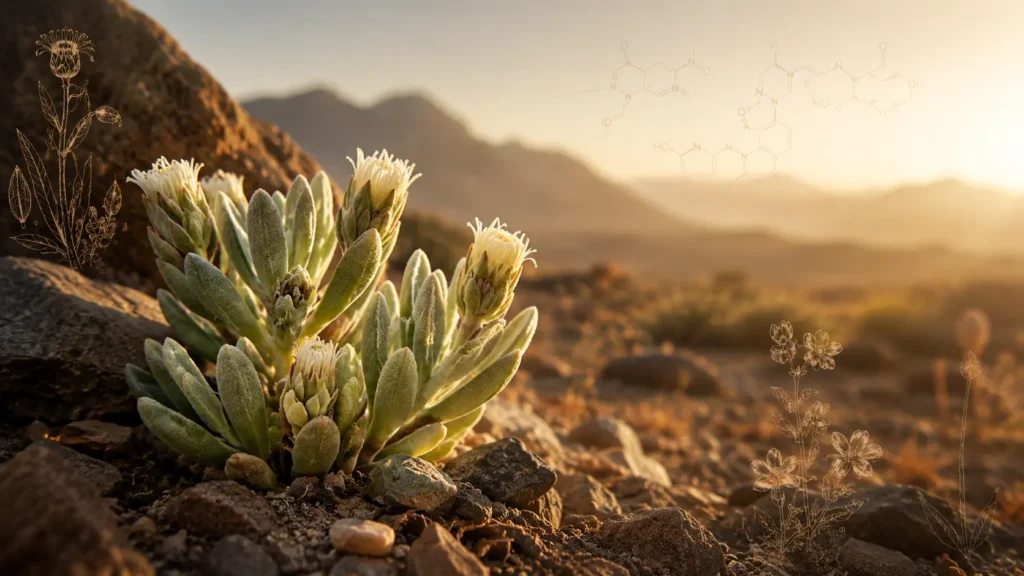
Kanna, also known by its botanical name Sceletium tortuosum, is a succulent plant native to South Africa. It is one of the most well-known plants in Southern African ethnobotany and has attracted growing interest in modern botanical, phytochemical and pharmacological research.
The plant is also known by several traditional and regional names, including kougoed, channa and kougoed-kanna. In scientific literature, it may also appear under older botanical classifications such as Mesembryanthemum tortuosum.
Today, kanna is mainly discussed because of its distinctive natural alkaloid profile. Researchers have identified several compounds in Sceletium species, including mesembrine, mesembrenone, mesembrenol and related mesembrine-type alkaloids. These compounds are part of the reason why Sceletium tortuosum has become an important subject in botanical research.
This article explains what kanna is, where it comes from, why it is scientifically interesting and how modern kanna extracts are commonly described. For additional educational information about kanna and Sceletium tortuosum, you can also visit KannaOne.
What Is Kanna?
Kanna is the common name for Sceletium tortuosum, a low-growing succulent plant from South Africa. Like many succulents, it is adapted to dry environments and has fleshy leaves that help it survive in arid and semi-arid regions.
The plant belongs to the Aizoaceae family, a large family of flowering plants that includes many South African succulents. Sceletium tortuosum is often associated with dry landscapes, rocky soils and regions where hardy succulent species are able to thrive.
In modern botanical commerce, the term “kanna” may refer to several forms of Sceletium material, including:
- Dried plant material
- Powdered botanical raw material
- Ratio extracts, such as 10:1, 20:1, 50:1 or 100:1
- Standardized extracts based on alkaloid content
- Laboratory-tested botanical extracts for technical or analytical applications
Because different forms can vary significantly, it is important to understand the difference between raw plant material and standardized extract products.
Traditional Names: Kanna, Kougoed and Channa
Kanna has a long history in Southern African ethnobotanical literature. Traditional names such as kougoed and channa are commonly mentioned in relation to Sceletium species.
The term kougoed is often translated as “chewing stuff” or “something to chew,” reflecting historical descriptions of how the plant was traditionally prepared in certain cultural contexts. However, modern commercial products may be produced, processed and standardized in very different ways from historical plant preparations.
For this reason, it is important not to assume that modern kanna extracts are identical to traditional preparations. A standardized extract with a defined alkaloid percentage is a very different material from a traditionally prepared plant product.
Why Is Sceletium tortuosum Scientifically Interesting?
Sceletium tortuosum is scientifically interesting because it contains a group of alkaloids that are relatively distinctive to the plant. These include compounds such as:
- Mesembrine
- Mesembrenone
- Mesembrenol
- Mesembranol
- Related mesembrine-type alkaloids
Scientific studies have investigated these alkaloids for their potential interactions with biological targets such as the serotonin transporter and phosphodiesterase-4, often abbreviated as PDE4. These areas of research are part of why kanna appears frequently in discussions of ethnopharmacology and plant-based neurochemistry.
However, it is important to be precise: research on specific extracts, isolated compounds or experimental models should not be generalized to all kanna products. Different products may vary in plant part, extraction method, alkaloid profile, purity, batch quality and intended use.
Kanna Alkaloids Explained
The most discussed alkaloid in Sceletium tortuosum is mesembrine. It is often used as a key marker compound when discussing kanna’s phytochemical profile.
Another important compound is mesembrenone, which has received attention in research because of its potential relevance to different biological pathways. Other related alkaloids, such as mesembrenol and mesembranol, may also contribute to the overall chemical fingerprint of the plant.
In practical terms, the alkaloid profile matters because it can help define the consistency of an extract. For example, a standardized kanna extract may be described as containing a specific percentage of total alkaloids. This is different from a simple ratio extract, which describes how much plant material was used to produce a certain amount of extract.
For technical, botanical and analytical purposes, standardization can make materials easier to compare across batches.
Kanna Powder vs Kanna Extract
One of the most common points of confusion is the difference between kanna powder and kanna extract.
Kanna powder usually refers to dried and ground plant material. It may contain the plant’s naturally occurring compounds, but the exact alkaloid content can vary depending on growing conditions, harvest timing, processing and storage.
Kanna extract refers to material that has undergone an extraction process. Extracts are often described using ratio numbers such as 10:1, 20:1, 50:1 or 100:1. These numbers generally indicate the relationship between the amount of raw plant material used and the amount of final extract produced.
A standardized kanna extract goes one step further. Instead of only describing the extraction ratio, it is produced to meet a target specification, such as a defined percentage of total alkaloids.
For example:
- A 50:1 extract describes a concentration ratio
- A 5% alkaloid extract describes a measured chemical specification
- A COA-tested extract provides batch-specific documentation
This distinction is important for customers comparing different Sceletium tortuosum materials.
What Does “Standardized Kanna Extract” Mean?
A standardized kanna extract is produced to meet a specific chemical profile. In many cases, this means that the extract is standardized to contain a defined level of total alkaloids or specific marker alkaloids.
Standardization is useful because botanical materials can naturally vary. Soil, climate, harvest conditions, drying method and extraction technique can all influence the final composition of a plant material.
For botanical suppliers, standardization can help with:
- Batch consistency
- Analytical comparison
- Quality control
- Documentation
- Research and technical applications
When reviewing kanna products, customers should look for clear product specifications, batch testing and, where available, a Certificate of Analysis.
Why Laboratory Testing Matters
Laboratory testing is especially important for botanical raw materials and extracts. Since plant materials can vary naturally, analytical testing helps verify identity, quality and consistency.
Common quality-control methods for botanical extracts may include:
- HPLC analysis
- Alkaloid profiling
- Microbiological testing
- Heavy metal screening
- Pesticide residue testing
- Batch-specific Certificates of Analysis
For Sceletium tortuosum, HPLC testing is particularly useful because it can help identify and quantify relevant alkaloids. This makes it easier to understand whether a product matches its stated specification.
A supplier that provides clear testing information gives customers better transparency and confidence in the material they are purchasing.
Kanna in Modern Scientific Literature
Modern research on Sceletium tortuosum has explored several areas, including ethnobotany, phytochemistry, pharmacology, toxicology and human studies involving specific standardized extracts.
Some studies have investigated how certain Sceletium extracts interact with biological systems. Others have focused on safety evaluation, alkaloid chemistry or traditional use. There are also human studies involving specific standardized extracts, but these findings should be interpreted carefully.
A key point is that scientific results from one branded or standardized extract do not automatically apply to every kanna product. Extract type, alkaloid concentration, production method and testing standards all matter.
Because of this, responsible kanna education should clearly distinguish between:
- Traditional ethnobotanical descriptions
- Laboratory or cell-based studies
- Animal studies
- Human research on specific standardized extracts
- Commercial botanical raw materials
This distinction helps avoid exaggerated claims and supports a more accurate understanding of the plant.
Is Kanna the Same as Sceletium tortuosum?
In most commercial and botanical contexts, “kanna” refers to Sceletium tortuosum. However, the Sceletium genus includes multiple species, and the term kanna has sometimes been used more broadly in traditional or regional contexts.
For product identification, the botanical name is important. A clearly labelled product should specify the plant species, such as Sceletium tortuosum, rather than relying only on a common name.
This is especially important when comparing extracts, because different species, plant parts or processing methods may produce different chemical profiles.
What Should Buyers Look for in Kanna Products?
When comparing Sceletium tortuosum products, buyers should look for transparent product information rather than vague marketing claims.
Important details include:
- Botanical name: Sceletium tortuosum
- Product type: powder, ratio extract or standardized extract
- Extraction ratio, if applicable
- Alkaloid percentage, if standardized
- Batch testing information
- Certificate of Analysis availability
- Clear intended-use statement
- Supplier transparency
For technical, botanical or analytical use, these details are often more meaningful than broad claims about “strength” or “effects.”
Responsible Use of Kanna Information
Kanna is a fascinating plant with a long ethnobotanical history and an expanding body of scientific literature. At the same time, it is important to discuss it responsibly.
Not all kanna products are the same. A dried plant powder, a 100:1 extract and a 5% standardized alkaloid extract may differ significantly. Scientific studies may also use specific extracts that are not directly comparable to products sold as general botanical raw materials.
For this reason, kanna should be discussed with careful attention to product type, quality control, analytical documentation and intended use.
At EUKratom, our Sceletium tortuosum materials are offered as botanical raw materials for technical, botanical and analytical purposes. They are not sold for consumption.
Explore our Sceletium tortuosum botanical raw material and standardized kanna extracts to learn more about available product specifications.
Frequently Asked Questions About Kanna
What is kanna?
Kanna is the common name for Sceletium tortuosum, a succulent plant native to South Africa. It is known for its traditional names, such as kougoed and channa, and for its distinctive alkaloid profile.
Is kanna the same as Sceletium tortuosum?
In most modern botanical and commercial contexts, kanna refers to Sceletium tortuosum. However, using the botanical name is more precise than relying only on the common name.
What are kanna alkaloids?
Kanna alkaloids are naturally occurring compounds found in Sceletium species. The best-known examples include mesembrine, mesembrenone, mesembrenol and related alkaloids.
What is a standardized kanna extract?
A standardized kanna extract is produced to meet a defined chemical specification, such as a particular percentage of total alkaloids. This is different from a simple ratio extract.
What does 50:1 or 100:1 kanna extract mean?
A ratio such as 50:1 or 100:1 generally describes how much raw plant material was used to produce a smaller amount of extract. It does not necessarily mean the extract has a specific alkaloid percentage unless this is verified by testing.
Why is HPLC testing important for kanna?
HPLC testing can help identify and measure specific alkaloids in a botanical extract. This supports quality control, batch consistency and analytical transparency.
References
Brendler, T. et al. “Sceletium for Managing Anxiety, Depression and Cognitive Impairment: A Traditional Herbal Medicine in Modern-Day Regulatory Systems.” Molecules, 2021.
Harvey, A. L. et al. “Individual and Combined Effects of Sceletium tortuosum Alkaloids on the Serotonin Transporter and Phosphodiesterase-4.” Journal of Ethnopharmacology, 2011.
Terburg, D. et al. “Acute Effects of Sceletium tortuosum on Amygdala Reactivity.” Neuropsychopharmacology, 2013.
Chiu, S. et al. “The Effects of Sceletium tortuosum in Healthy Adults: A Randomized, Double-Blind, Placebo-Controlled Study.” Evidence-Based Complementary and Alternative Medicine, 2014.
Murbach, T. S. et al. “A Toxicological Safety Assessment of a Standardized Extract of Sceletium tortuosum.” Food and Chemical Toxicology, 2014.

 Kratom
 Kratom Alternatives
 Kanna (Sceletium T.)
 Accessories
 Sale Products
 Wholesale
 Support
 Blog
Blog